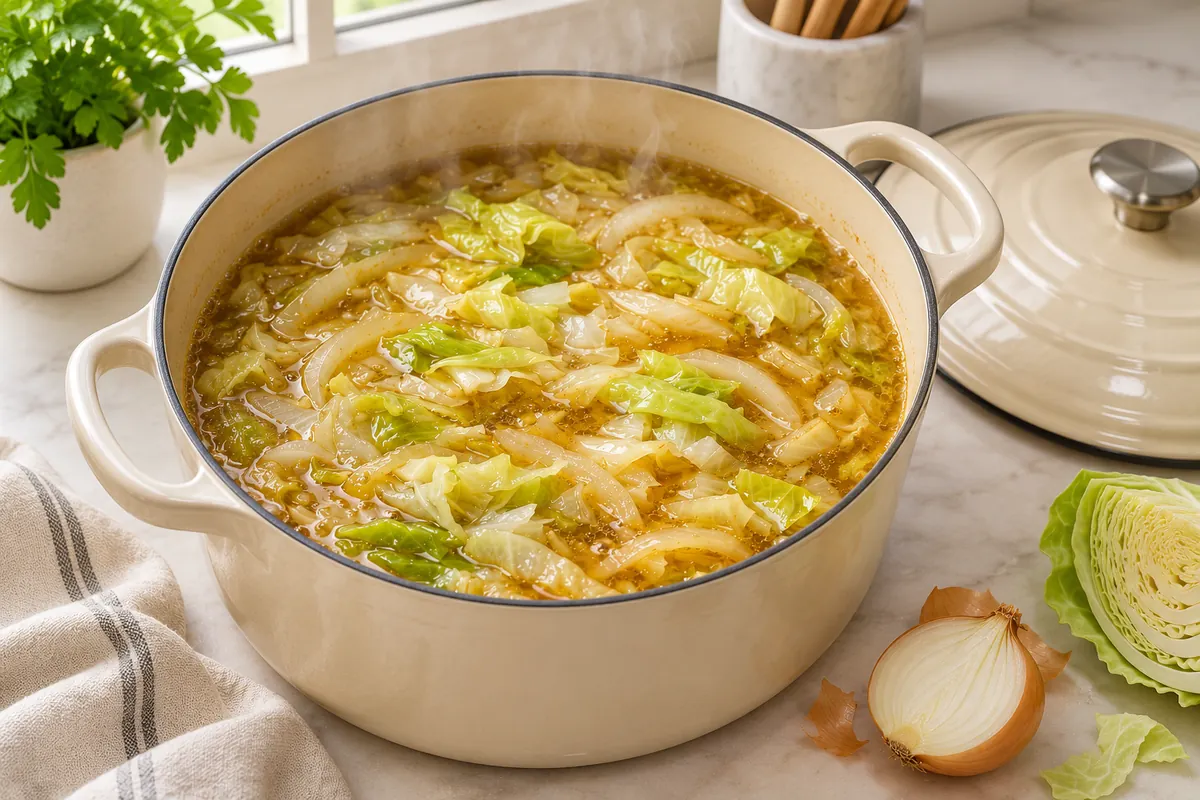
Some soups require very little work on your part but provide a huge amount of satisfaction. This Slow-Cooked Rustic Cabbage and Onion Soup is one of those soups. The onions slowly melt into a sweet, amber base. The cabbage is cooked until it is silky and tender. The broth is a savory, rounded and satisfying soup. It is the kind of plain food that can make a cold evening feel better. By 2024 I had begun making this Slow-Cooked Rustic Cabbage and Onion Soup. I was looking for a very cheap meal that could be left to cook on the stove while I got on with other things. I have since changed the seasonings and the order of the layers many times but this is the version I stick to. It is simple food based on two vegetables, a good stock and a lot of patience. There is no cream, no flour and nothing exotic. The result is a pot of wonderful smelling food that will be ready before you know it.
Why this Slow-Cooked Rustic Cabbage and Onion Soup is worth making
This slow cooked soup is made with very cheap vegetables – cabbage and onions. But after hours of slow cooking these simple ingredients are transformed into something much better than their cost would suggest. The natural sugars in the vegetables are drawn out by the slow cooking process to create a sweet and savory soup with no added sugar. It is also forgiving. It doesn’t need to be watched like a hawk and it can be left to simmer for a few minutes more than necessary without too much worry. It also keeps well and can be reheated easily. It’s also better the next day so perfect for those who like to cook once and eat twice. By 2025 I would often make this soup during a cold week when the fridge was near empty. It is a very filling, vegetable based soup that can be made to be as brothy or as thick as you like.
A few thoughts on the ingredients
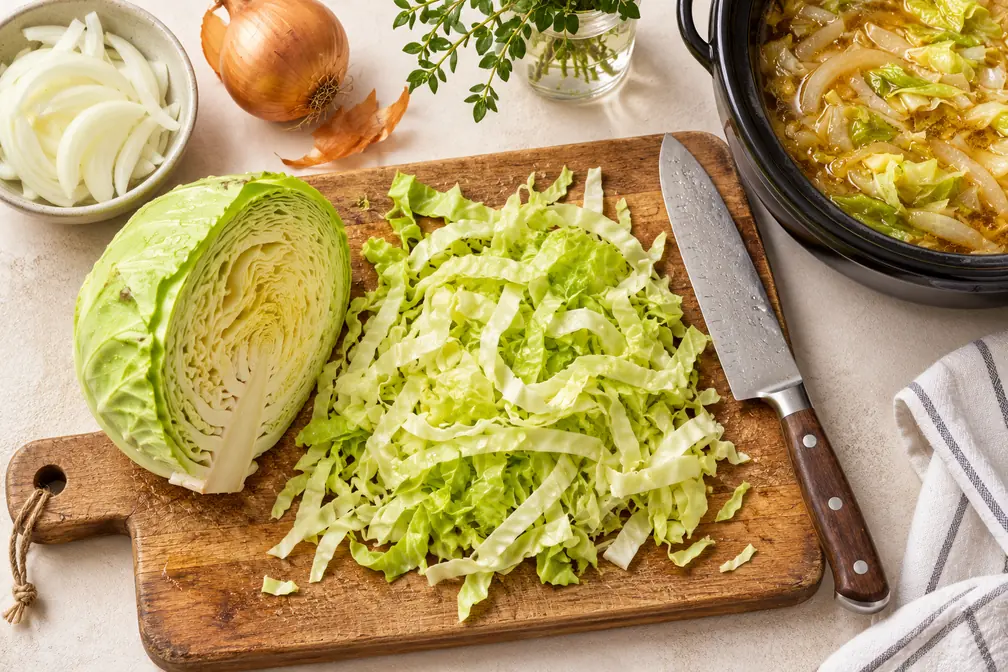
Choose a firm, heavy green cabbage with tightly packed, crisp leaves. Savoy cabbage is also very good. It is a bit softer and can be slightly sweeter than green cabbage. Red cabbage can be used, but it does turn the broth a rather unattractive, dull purple. Remove any wilted outer leaves and cut out the tough core before slicing. Yellow onions are best. They have enough sugar to caramelize and enough body to keep the soup from being too bland. Sweet onions are also good, but can make the finished soup a bit too sweet. A good stock is essential for this soup as there are so few other ingredients to hide behind. Homemade stock is best, but a good quality carton or cube can be used. Choose a low-sodium stock as you will be adding salt to the soup. Vegetable stock makes a vegetarian soup, chicken stock makes a slightly richer soup. Garlic, a bay leaf and some dried thyme are the aromatics used in this soup. A dollop of tomato paste adds some depth and a splash of apple cider vinegar or lemon juice at the end gives the soup a lift. Potatoes, carrots or white beans could be added to make the soup more filling. Butter gives the onions a richer flavor than oil, but olive oil is fine for a dairy-free soup.
How the dish comes together
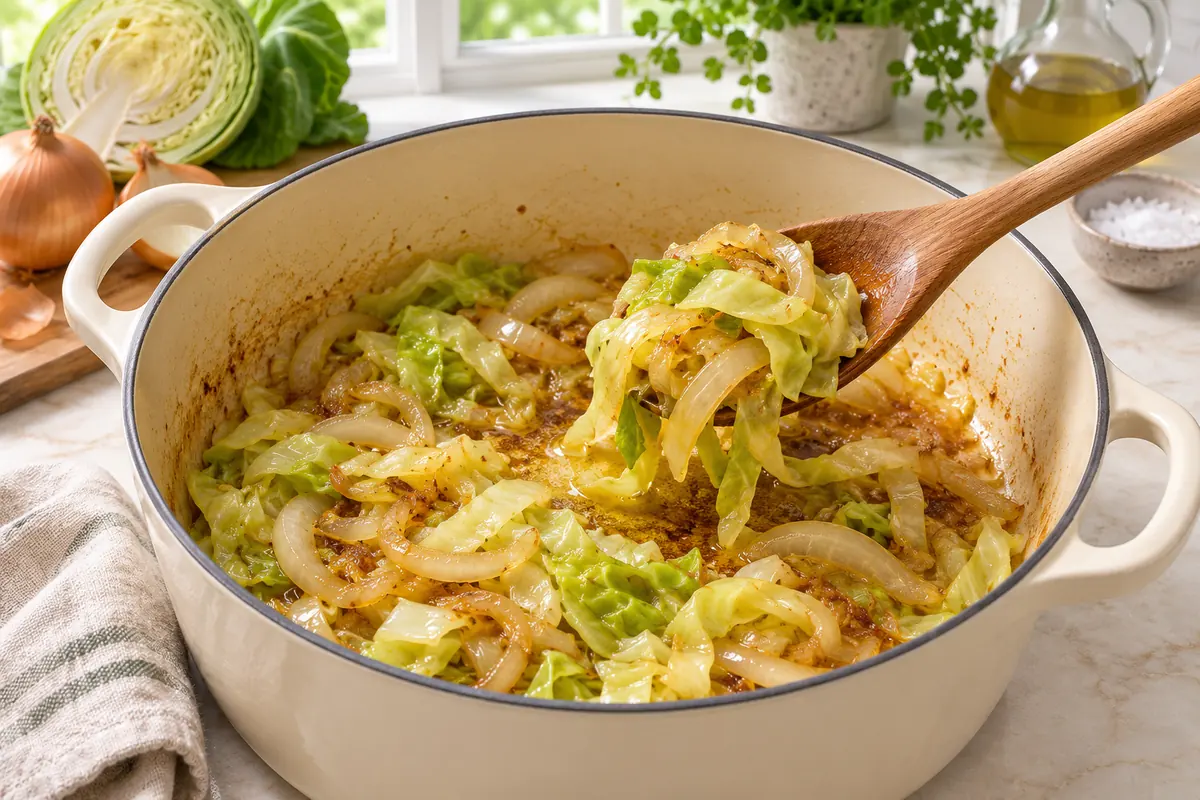
First, the onions are cooked in butter and oil over a low heat. They start off pale and glistening and have a sharp, raw smell. Stir them from time to time. Slowly, the edges of the onions will soften and they will turn a golden color before slowly darkening to a rich amber color. The smell of the onions will slowly change from raw to warm and sweet, almost like toffee. The garlic and tomato paste are then added. The tomato paste will slowly darken as it is cooked, and you will start to smell a roasted, savory aroma coming from the pot. A splash of stock is then added to lift any browned bits from the bottom of the pot. The sticky brown film that has stuck to the bottom of the pot will dissolve into the stock. This is where most of the flavor is. The cabbage is added to the pot in handfuls. It will look like a lot of cabbage, and the pot will be quite full. But as it cooks, the cabbage will wilt and sink down into the onions. The thyme, bay leaf, remaining stock, salt and pepper are then added to the pot. The soup is then brought to a bare simmer. Cover the pot and let the soup simmer on low heat until the cabbage has lost its crunch and is soft, translucent and almost buttery. The broth will have taken on a warm golden color. Just before serving, stir in a little vinegar and taste. This last minute addition really wakes up the soup.
How to tell it is ready
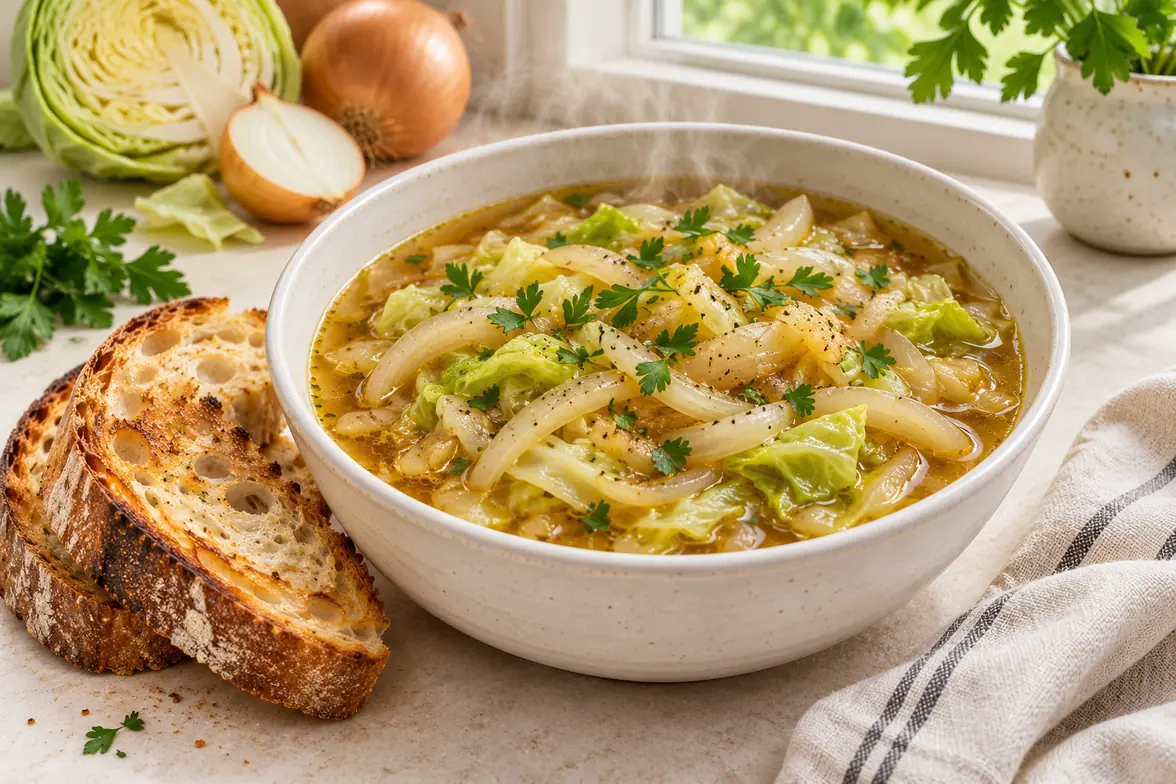
The cabbage should be completely soft and pale, with no raw crunch left in the ribs of the cabbage. If you press a piece of the cabbage against the side of the pot, it should collapse easily with a spoon. The onions should have almost melted into the broth, which should be a warm, golden color. It should smell sweet and savory, with the thyme and garlic in the background. The soup should taste rounded and full of flavor, not sharp, watery or raw. The soup should have some body to it. When you stir it, it should move slowly and coat the spoon lightly. It shouldn’t run off the spoon like water.
Tips for the best slow-cooked rustic cabbage and onion soup
Take your time with the onions. Rushing them over high heat leaves them browned in patches but raw in the middle, and the soup loses its sweetness. Cut the cabbage into thin ribbons of even width. This will ensure that the cabbage cooks evenly. Season the soup in stages, tasting as you go. Salt added early in the cooking process will draw out moisture from the onions and help them to soften, but add the final seasoning at the end of the cooking process. Keep the soup on a gentle simmer. A hard boil will make the cabbage smell of sulfur and will make it mushy. Add the acid last. Vinegar or lemon juice added early in the cooking process will lose its punch.
Troubleshooting
If the soup is bland then add a little more salt or a little more acid (e.g. vinegar or lemon juice). Add in small amounts and taste after each addition. If the soup is bitter then it is likely that you have scorched the onions or garlic. Next time, use a lower heat and stir more often. The soup smells too much of cabbage – the cabbage has been cooked too hard or for too long. Keep the soup on a low simmer and keep the lid slightly ajar. The broth is too thin and watery – cook the soup uncovered for a little longer or mash some of the cabbage or potato against the side of the pot. Too sweet? Add a little more lemon juice or a pinch of extra black pepper.
Serving ideas
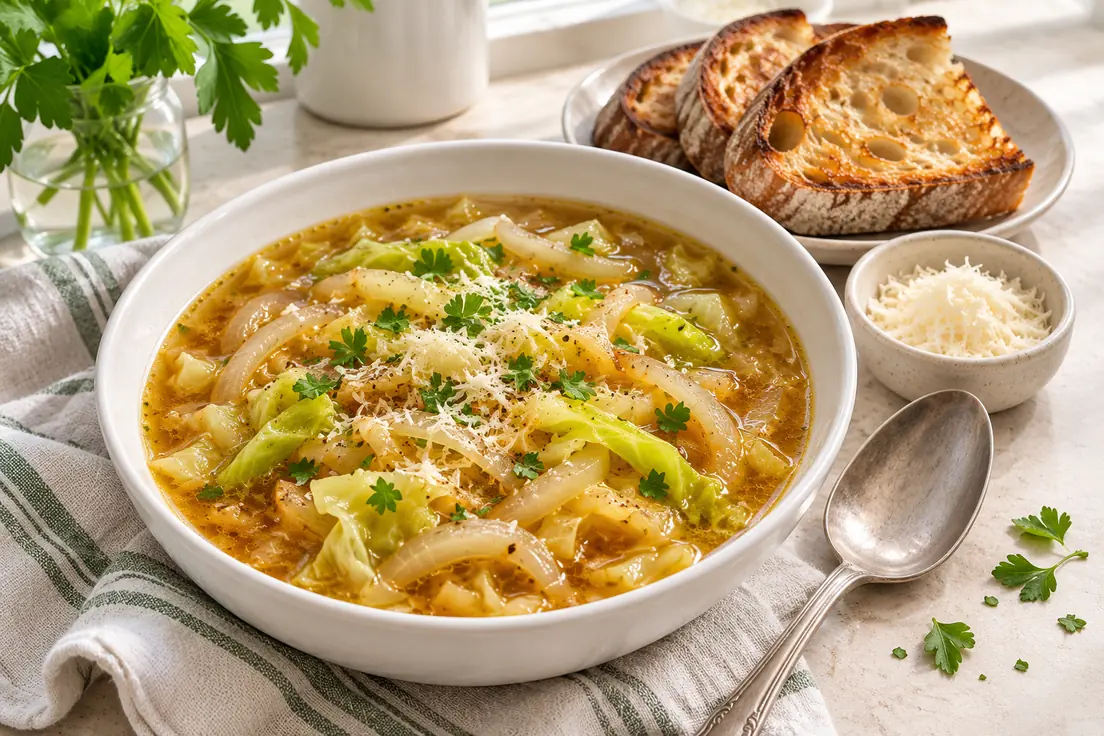
Ladle the soup into wide bowls and serve with thick slices of toasted sourdough or rye bread. A spoonful of sour cream or plain yogurt is a great cool, tangy addition. A scatter of chopped parsley or dill is also a great addition. To make the soup more substantial, top with some grated cheese (e.g. Gruyère or mature cheddar) and allow it to melt into the hot soup. A grind of black pepper and a drizzle of good quality olive oil is also a great addition.
Variations
Add some diced potato or carrot to make the soup more filling. Or add a tin of white beans for some extra protein. Some smoked paprika or caraway seeds would give the soup an Eastern European twist. Or add some crumbled sausage or bacon for a meatier soup. To make a smoother soup, simply blend half of the soup and then stir it back in. This will give the soup a creamy texture without the need for cream. A splash of white wine added with the onions would also be a great addition. If you like some heat, then add some chilli flakes.
Storage and make-ahead
Cool the soup quickly and refrigerate within 2 hours of making. Store in an airtight container at 4 °C (40 °F) or below. The soup will keep for up to 4 days. Reheat until steaming hot all the way through (74 °C (165 °F)) and stir occasionally. The soup can be frozen for up to 3 months. Leave a little space in the container for expansion when freezing. Thaw overnight in the fridge before reheating. Do not leave the soup at room temperature for more than 2 hours (or 1 hour on a hot day). The soup improves with time, so make it a day ahead if you can. Add the vinegar and fresh herbs after reheating the soup, so that they stay bright. If in doubt, throw it out.
FAQs
Can I make this soup in a slow cooker?
Yes. Soften the onions in a pan first, then transfer everything to the slow cooker and cook on low until the cabbage is silky.
Is this soup vegan?
It can be. Use olive oil instead of butter and a vegetable stock. Don’t add any cheese or sour cream.
Can I use red cabbage?
Yes, but the color of the soup will be a bit murky and the flavor will be a little more earthy. Green or savoy cabbage is better.
Why does my soup smell of cabbage?
The cabbage has been overcooked. Keep the heat low and don’t simmer the soup for too long.
Can I make the soup thicker without flour?
Yes. Blend a ladleful of the soup and stir it back in. Or add a diced potato to the soup as it simmers.
Is this soup good for batch cooking?
Yes, very good. It reheats well and can be frozen in portions without too much loss of flavor.
A Note From My Kitchen
I used to think that cabbage soup was a punishment meal, but this soup has proved me wrong. Take your time with the onions. Keep the soup on a gentle simmer. Add the acid at the end of the cooking process. These are the key habits to develop, rather than any special ingredients. This Slow-Cooked Rustic Cabbage and Onion Soup can be made in any way you like, with whatever you have in the cupboard. I would love to hear how you get on with this soup. Please leave a star rating and a comment below, and let me know what changes you made.


Slow-Cooked Rustic Cabbage and Onion Soup: Humble, Sweet and Deeply Comforting
Description
This slow-cooked rustic cabbage and onion soup starts with slowly caramelised onions, then simmers thinly sliced cabbage with garlic, thyme and stock until silky and sweet. A splash of vinegar brightens the finish. It is inexpensive, vegetarian, freezer-friendly and tastes even better the next day.
For the soup
Instructions
-
Method
- Soften the onions: melt the butter with the olive oil in a large heavy pot over medium-low heat. Add the onions and 1 tsp salt, and cook for 25 minutes, stirring every 3 to 4 minutes, until deep golden amber.
- Add the aromatics: stir in the garlic and tomato paste. Cook for 2 minutes, until fragrant and slightly darkened.
- Deglaze: pour in 250 ml of the stock and scrape up the browned bits from the bottom of the pot. Simmer for 2 minutes.
- Add the cabbage: add the sliced cabbage in 3 handfuls, stirring each until it wilts. Add the thyme, bay leaf, pepper and the remaining 1.25 l stock.
- Simmer: bring to a gentle simmer, then partly cover and cook over low heat for 40 minutes, stirring occasionally, until the cabbage is completely soft.
- Finish: remove the bay leaf, stir in the vinegar and taste. Add a pinch of salt if needed.
- Rest: take the pot off the heat and leave it for 10 minutes so the flavours settle.
- Serve: ladle into warm bowls and scatter with the parsley.
Nutrition Facts
Servings 6
- Amount Per Serving
- Calories 190kcal
- % Daily Value *
- Total Fat 8g13%
- Saturated Fat 3.5g18%
- Cholesterol 10mg4%
- Sodium 520mg22%
- Potassium 560mg16%
- Total Carbohydrate 27g9%
- Dietary Fiber 6g24%
- Sugars 13g
- Protein 5g10%
- Vitamin A 45 mcg
- Calcium 110 mg
- Iron 1.6 mg
* Percent Daily Values are based on a 2,000 calorie diet. Your daily value may be higher or lower depending on your calorie needs.
Note
- Cook the onions slowly over medium-low heat for the full 25 minutes; this builds the sweet flavour base of the soup.
- Slice the cabbage into thin, even ribbons so it softens at the same rate.
- For a dairy-free or vegan soup, use 3 tbsp olive oil in place of the butter and olive oil, and choose vegetable stock.
- Nutrition values are estimates based on standard ingredient data, using vegetable stock and butter, and will vary with brands.