I love lemon mousse. It’s so rich and creamy and decadent. But, sometimes, I want something sweet and light. Something that won’t weigh me down after a big meal. This lower-calorie lemon mousse is just that. It’s light, airy, and so refreshing. The soft, sweet flavor of the lemon is perfectly balanced with the tangy Greek yogurt. It sets up into a lovely, light cloud of mousse that holds its shape on a spoon but melts in your mouth. I made this for the first time in 2024 after a week of eating a lot of heavy meals and wanting something sweet but not heavy. I used Greek yogurt, some whipped topping or cream, and a small amount of gelatin to set it up. I have since changed the ratio of lemon juice to sweetener many times and the version below is the one that I use most often. It’s easy to make, can be made ahead of time, and looks great on a plate.
Why this lower-calorie lemon mousse is worth making
Traditional lemon mousse contains large amounts of cream and sugar. This lower-calorie version uses Greek yogurt as the base which gives the mousse its body and adds a pleasant tangy flavor as well as some protein. No baking needed and only a small amount of cooking to warm the lemon mixture. Then whisk, fold, spoon and chill. Fridge does the rest. This is a really great flavor for a lower-calorie dessert. Fresh lemon always tastes better than bottled lemon juice and the zest from the lemon adds a really lovely aroma of lemon grove. It’s become my go-to dessert for special occasions by 2025.
A few thoughts on the ingredients
The lemons should be heavy for their size with thin, shiny skin that feels fragrant. If you can get unwaxed lemons even better as you can use the zest as well. Bottled lemon juice tastes flat and sometimes even metallic, so I wouldn’t use it for this recipe. I used Greek yogurt for this recipe, thick and plain and unsweetened. I used low-fat Greek yogurt as I felt that the mousse would be lighter with it, but you could use full-fat Greek yogurt for a richer, creamier mousse. Do not use thin, runny yogurt as this will loosen the mousse and make it sloppy. The gelatin is needed to set the mousse. Powdered gelatin is easy to find and reliable but is not vegetarian. Agar powder can be used instead but the mousse will have a firmer, less silky texture. Whipping cream or light whipping cream is used to add air and make the mousse light. Use a mild, runny honey or caster (superfine) sugar. The honey will add a floral note to the lemon but the sugar will keep the lemon flavor clean. Add a drop of vanilla and a pinch of salt to finish off the flavors.
How the dish comes together
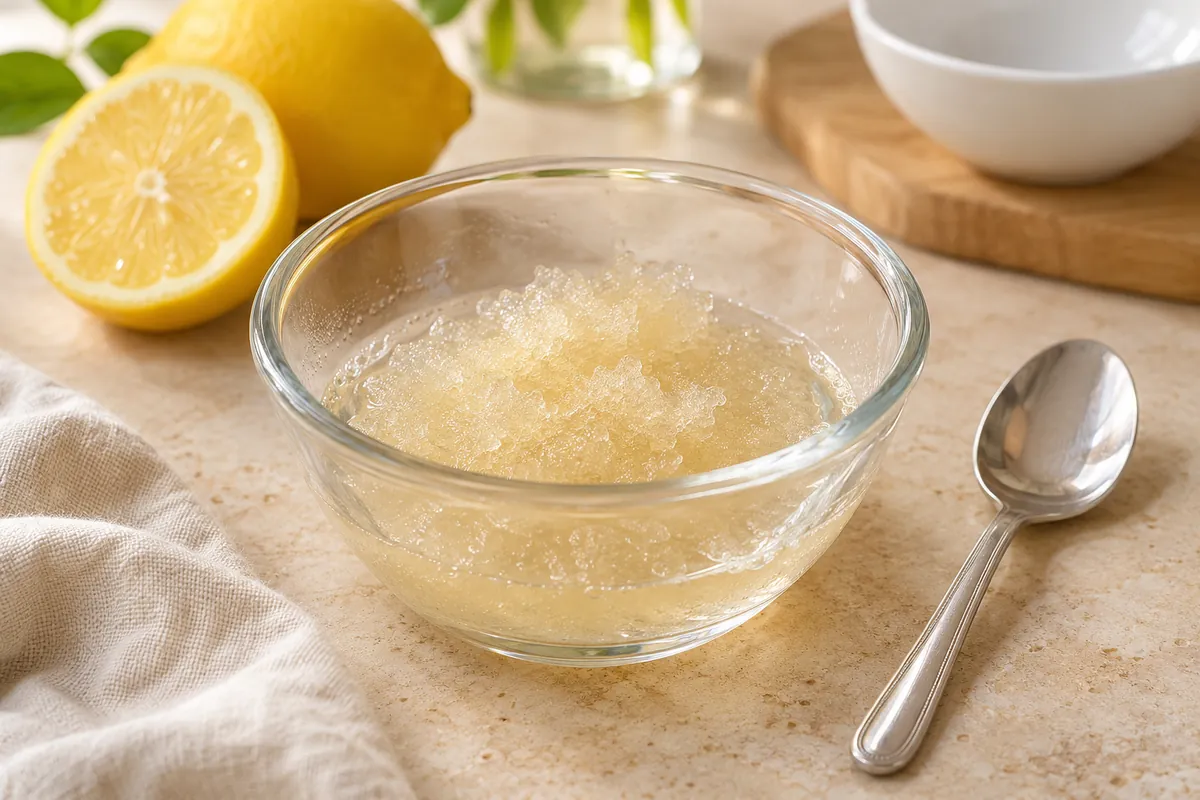
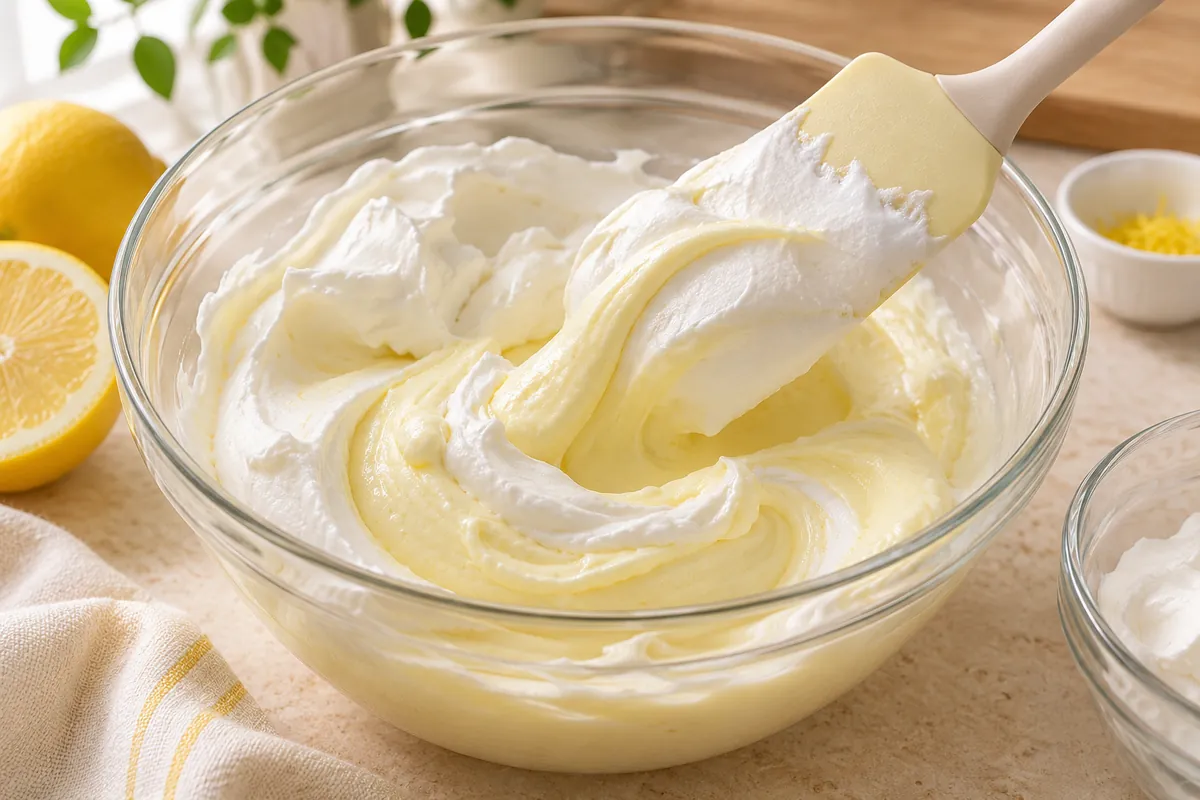
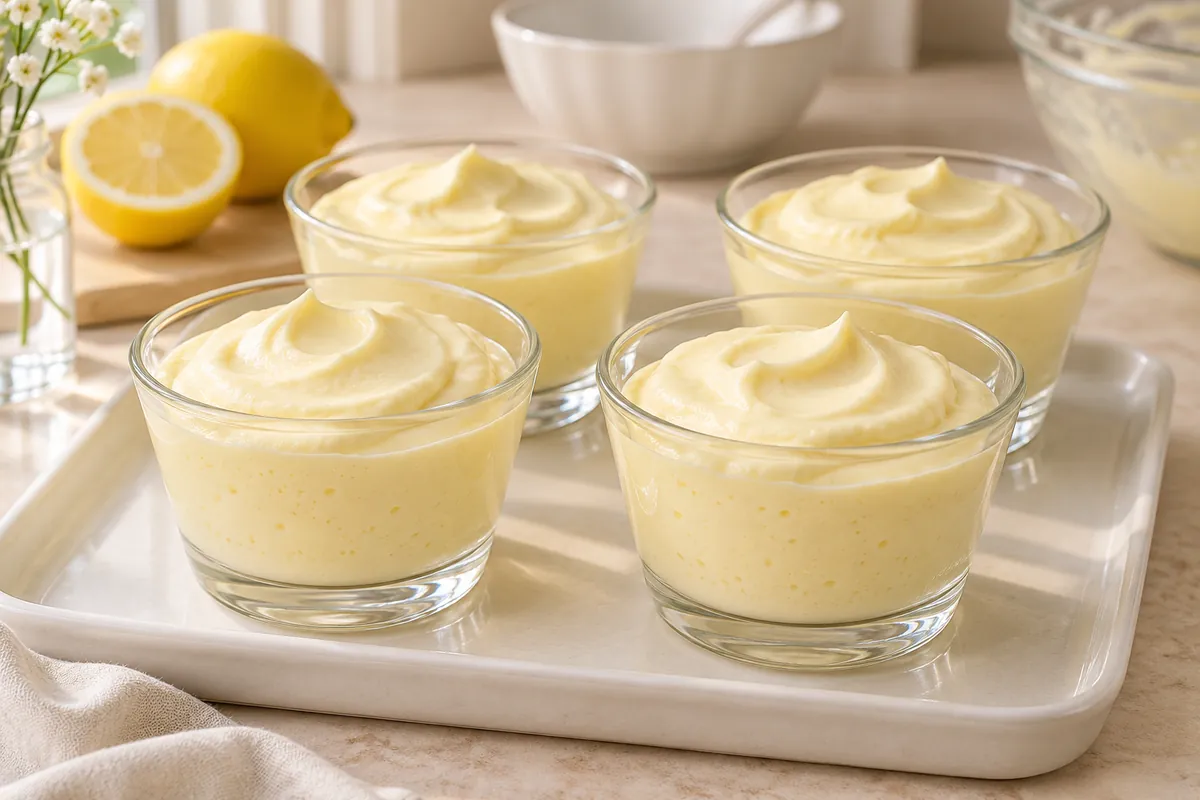
Firstly, I sprinkle the gelatin over the cold water and leave it to swell. This takes about 5 minutes and turns the liquid into a wobbly, translucent mass, similar to set jelly. This part of the recipe cannot be rushed as the gelatin needs to be fully softened before it is added to the warm lemon mixture, otherwise there will be little rubbery threads left in the finished mousse. After that, the lemon juice, zest and sweetener are heated in a small pan until the mixture is steaming gently and giving off a sharply lemon-ish aroma. It must never boil, though. Once heated, the pan is removed from the heat and the softened gelatin is stirred in until it has dissolved completely into a clear, pale-gold liquid. The mixture is then left to cool until it is no longer warm to the touch. It is crucial that the mixture is not too warm when it is added to the yogurt and cream, as this will cause the yogurt and cream to melt. Let the lemon mixture cool while you whip the cream to soft peaks. Then stir the Greek yogurt until smooth, add the cooled lemon mixture and whisk to combine. It will look quite glossy and thin at this stage, but that is as it should be. The final step is to fold the whipped cream into the lemon mixture. I add a spoonful of the whipped cream to the base mixture first to loosen it up, and then fold in the rest of the cream with a large metal spoon or spatula, cutting down through the center of the bowl and then sweeping up the sides of the bowl. Be gentle, as each stir will knock out some of the air from the mousse. Spoon the mousse into the glasses, tap the glasses on the counter once or twice to settle the mousse and then cover with cling film. Put the glasses in the fridge to set.
How to tell it is ready
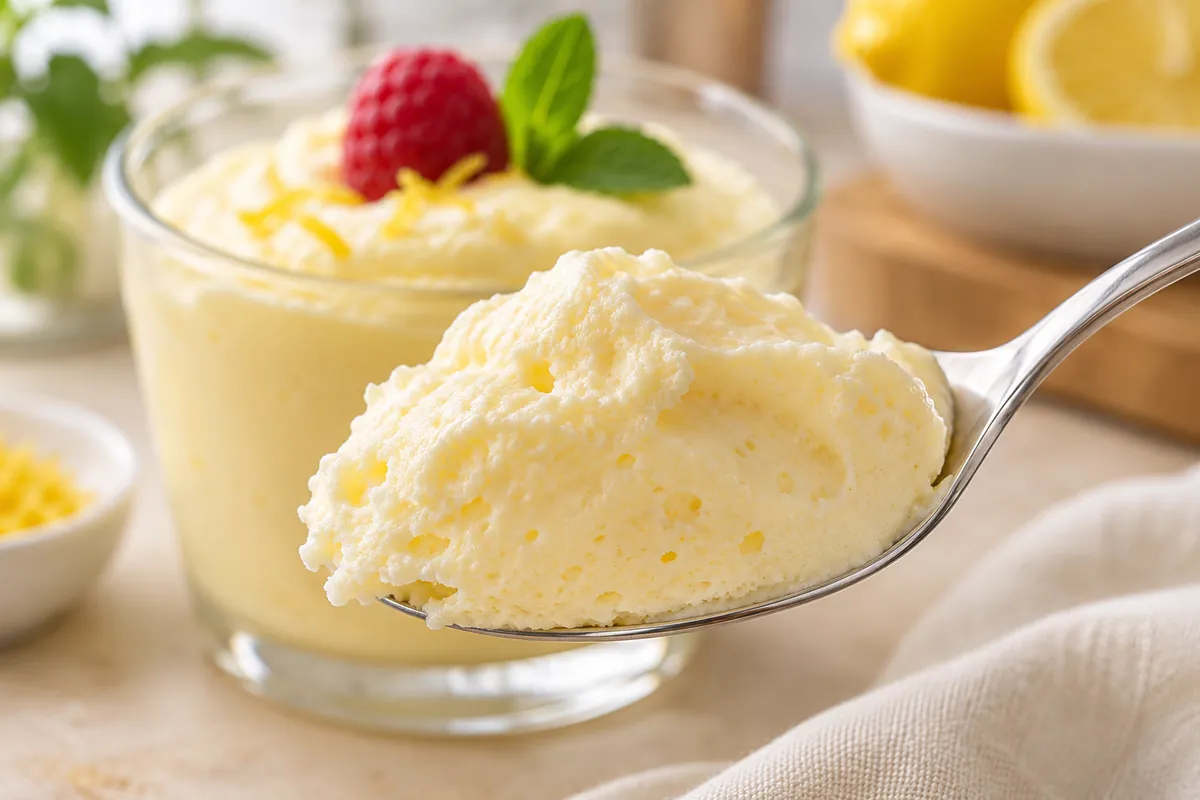
Once the mousse has set, it will have a soft but definite wobble when the glass is gently nudged. The surface of the mousse will also have a matte finish rather than a shiny and loose appearance. The mousse should be light and airy in texture and have a smooth consistency that is light on the tongue and not rubbery or stiff. It should not feel dense or look as though it has slumped or is pouring out of the glass.
Tips for the best lower-calorie lemon mousse
Bloom the gelatin properly and leave to soften fully before warming up. Cool the lemon mixture fully before adding to the cream. If the mixture is still warm then it will loosen the cream and create a flat mousse. Whip the cream to soft peaks only. If you whip to stiff peaks then they will not fold in properly and the mousse can look curdled. Fold with a large metal spoon or spatula and work slowly and gently to keep as much air as possible in the mousse. Taste the mousse before chilling. The cold will dull the sweetness of the honey so you may want to add a little more before chilling. You can chill the glasses in the fridge before serving, this will start the setting of the mousse as soon as you have spooned it into the glasses.
Troubleshooting
The mousse may be too runny because the gelatin has not dissolved properly or the mixture was too warm when added to the cream. Leave the mousse in the fridge for a bit longer and check that the gelatin has melted to a completely clear liquid next time. If it is rubbery then there is too much gelatin or the measure was wrong. Use level measures and a kitchen scale for best accuracy. If the mousse is grainy or looks curdled, the lemon mixture was added too hot to the cream, or the cream was whipped too much. Cool down the mixture and stop whipping when the cream has reached soft peaks. The mousse may be a bit too sharp. Add a little more honey to the mousse before chilling. The mousse may be a bit too flat. Add a pinch of salt to the mousse before chilling or even better a little more zest. If the mousse is a bit bitter then you have probably grated some of the white pith into the mousse as well as the yellow zest. Next time only grate the yellow zest.
Serving ideas
I like to serve the lower-calorie lemon mousse in small glasses with a few fresh raspberries or blueberries on top. A curl of lemon zest and a sprig of mint makes the dessert look even more impressive with very little effort. Thin shortbread biscuits or even a digestive biscuit crushed would make a great contrast to the soft mousse. For something a little more formal, spoon the mousse over a layer of berry compote or even just serve with a few slices of fresh strawberry.
Variations
Substitute the lemon with lime for a sharper taste, or use lemon and orange for a more mellow, rounded flavor. You could also stir a spoonful of passion fruit pulp through the mousse for a tropical twist. For a crunchy base, try crushing some biscuits and putting them in the bottom of the glasses before pouring the mousse on top. You could also make a ripple dessert by swirling some raspberry purée through the top of the mousse. This could be made dairy-free by using thick coconut or soy yogurt instead of Greek yogurt, although the flavor and texture would be different.
Storage and make-ahead
This mousse is best made ahead of time. Cover the glasses tightly with cling film and keep in the fridge at 4 °C (40 °F) or below. Eat within 3 days. Do not leave the mousse out of the fridge for more than 2 hours (1 hour on a hot day) as it contains dairy. You can make this dessert the day before you need it. Just cover the glasses with cling film and leave in the fridge until you are ready to serve. Add any toppings just before serving to keep them looking fresh. This mousse does not freeze well. It turns into a watery mess and loses its airy texture when thawed. If it smells sour or looks separated and watery, throw it away. When in doubt, throw it out.
FAQs
Can I use bottled lemon juice?
Yes, you can use bottled lemon juice but the flavor will be flat and slightly metallic. Fresh juice is much better.
Is this mousse suitable for vegetarians?
No, as standard gelatin is made from animal products. You can use agar powder instead but the texture will be slightly firmer.
Can I use low-fat yogurt?
Yes, you can use low-fat yogurt but make sure it is thick and strained, as you need the set to be soft.
Why does my mousse taste bitter?
You have probably grated some of the white pith from the lemon as well as the yellow zest. Next time make sure you only grate the yellow zest.
Can I make it without cream?
Yes. Substitute the whipped cream for more Greek yogurt to make a denser, tangier mousse.
Is it safe to serve to guests with allergies?
The mousse contains dairy, so you should check with guests before serving. Some people may also need to avoid gelatin.
A Note From My Kitchen
I used to be nervous of gelatin – I have had more than one wobbly disaster – but this recipe taught me that patience and a gentle hand are the most important things. Let the lemon mixture cool down fully, then fold the cream in slowly and give the mousse plenty of time in the fridge to set. Make this lower-calorie lemon mousse your own with any berries you have, and let me know how you got on with it. Please leave a star rating and a comment below, and let me know what changes you made.


Lower-Calorie Lemon Mousse: Light, Airy and Bright
Description
This lower-calorie lemon mousse folds thick Greek yogurt and softly whipped cream into a warm lemon and gelatin base, then chills it into a light, cloud-like dessert. It uses fresh lemon juice and zest for a bright, clean flavour, and is easy to make ahead for guests or a weeknight treat.
For the mousse
Instructions
-
Method
- Bloom the gelatin: sprinkle the gelatin over the 3 tbsp cold water in a small bowl. Leave for 5 minutes, until swollen and wobbly.
- Warm the lemon mixture: put the lemon juice, zest and honey in a small saucepan over low heat. Warm for 3 minutes, stirring, until steaming but not boiling.
- Dissolve the gelatin: remove the pan from the heat, add the bloomed gelatin and stir for 1 minute, until completely dissolved and clear.
- Cool: pour into a bowl and leave at room temperature for 15 minutes, until no longer warm to the touch.
- Whip the cream: in a cold bowl, whisk the cream and vanilla for 2 minutes, until soft peaks form.
- Combine the base: stir the yogurt and salt in a large bowl until smooth. Whisk in the cooled lemon mixture until evenly combined.
- Fold and fill: fold in the whipped cream in 2 additions, then spoon into 6 glasses (about 150 ml each).
- Chill and serve: cover and refrigerate for 4 hours, until set. Top with raspberries and mint, and serve cold.
Nutrition Facts
Servings 6
- Amount Per Serving
- Calories 150kcal
- % Daily Value *
- Total Fat 5g8%
- Saturated Fat 3g15%
- Cholesterol 18mg6%
- Sodium 60mg3%
- Potassium 170mg5%
- Total Carbohydrate 15g5%
- Dietary Fiber 0.3g2%
- Sugars 14g
- Protein 10g20%
- Vitamin A 35 mcg
- Calcium 110 mg
- Iron 0.2 mg
* Percent Daily Values are based on a 2,000 calorie diet. Your daily value may be higher or lower depending on your calorie needs.
Note
- Cool the lemon mixture for 15 minutes before combining it with the yogurt and cream; warm liquid loosens the set.
- Use only the yellow part of the zest; the white pith tastes bitter.
- For a vegetarian version, replace the gelatin with 1 tsp agar powder, simmered in the lemon mixture for 2 minutes; the texture will be firmer.
- Nutrition values are estimates based on standard ingredient data, using low-fat Greek yogurt and light whipping cream, without the raspberries, and will vary with brands.