I’ve made creamy scrambled eggs countless times over the years and yet they remain some of the most satisfying things to eat on a plate of food. Soft, fluffy and barely holding together, they are rich with a glossy, custardy texture that requires no cream and very little fuss. They can be dry, pale and slightly rubbery but that is largely down to how they are cooked – the heat, the time and the moment you remove them from the pan. This is my healthy version of creamy scrambled eggs. I use only the smallest amount of butter, some milk and lots of protein. They require nothing more than a bowl, a pan, some eggs and some milk and I can guarantee that you will have everything you need to make them in your kitchen right now. They are my default breakfast of choice for early 2024 and I can imagine them remaining on the menu for much of 2025 too.
Why these creamy scrambled eggs are worth making
They require very little to make, and give so much in return. There are no special pieces of equipment required, nor any long lists of ingredients to buy. They are a dish that can be made with only the smallest amount of attention. These are also a very balanced meal. The eggs contain lots of protein and the butter and milk used to make them creamy are used in such small amounts that the resulting dish is light but certainly not diet food. They taste generous. They are fast to make. This dish can be made in a pan and the pan can be washed up within the time it takes for toast to cool.
A few thoughts on the ingredients
Fresh eggs are best of course. A fresh egg has a plump yolk and a white that holds together well, so when cooked the texture of the eggs will be best. Free-range or pasture-raised eggs are also good as they tend to have a deeper colored yolk. The milk is what keeps the curds of the eggs tender. Whole milk is best but you can also use semi-skimmed milk or unsweetened oat or almond milk if you are avoiding dairy. Avoid any flavored or sweetened milk. In terms of fat, I use a little unsalted butter. A mild olive oil would also be good but you would lose some of the soft texture that butter gives. I use fine salt which dissolves quickly and evenly and freshly ground black pepper which takes only a second to grind. I also like to add some chives to the eggs at the end.
How the creamy scrambled eggs come together
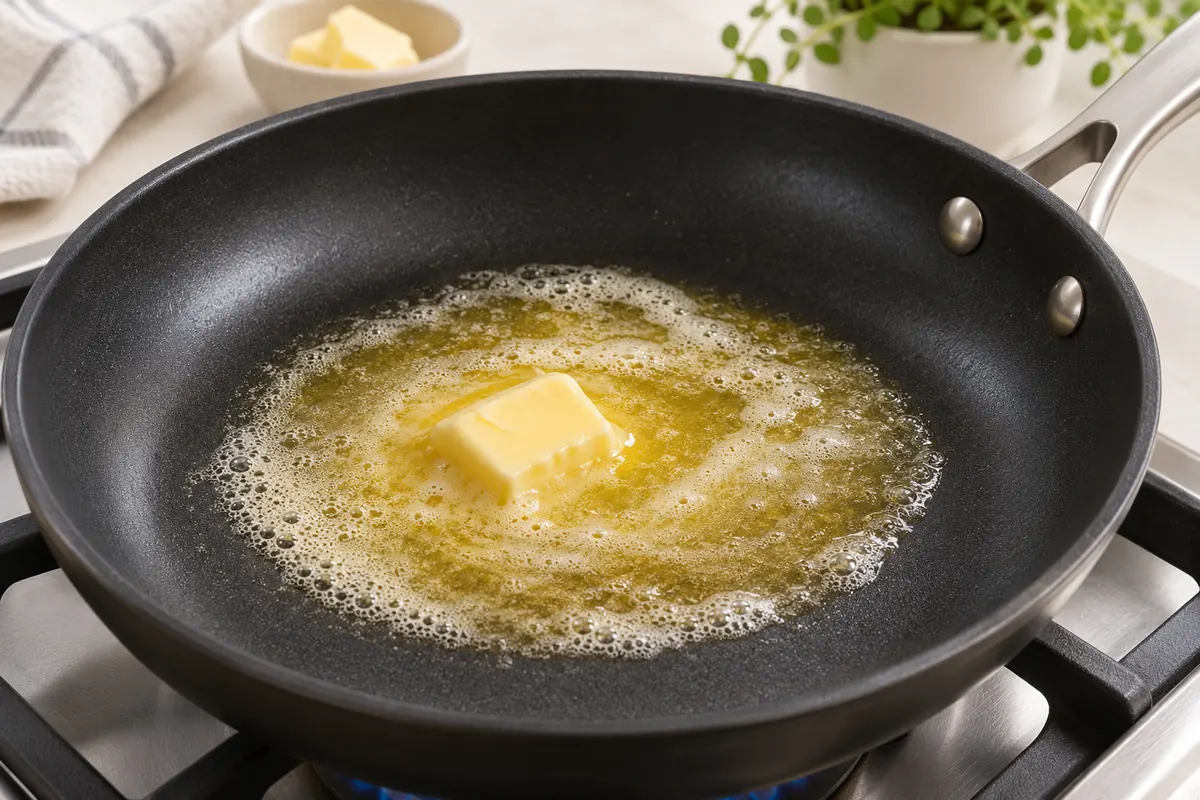
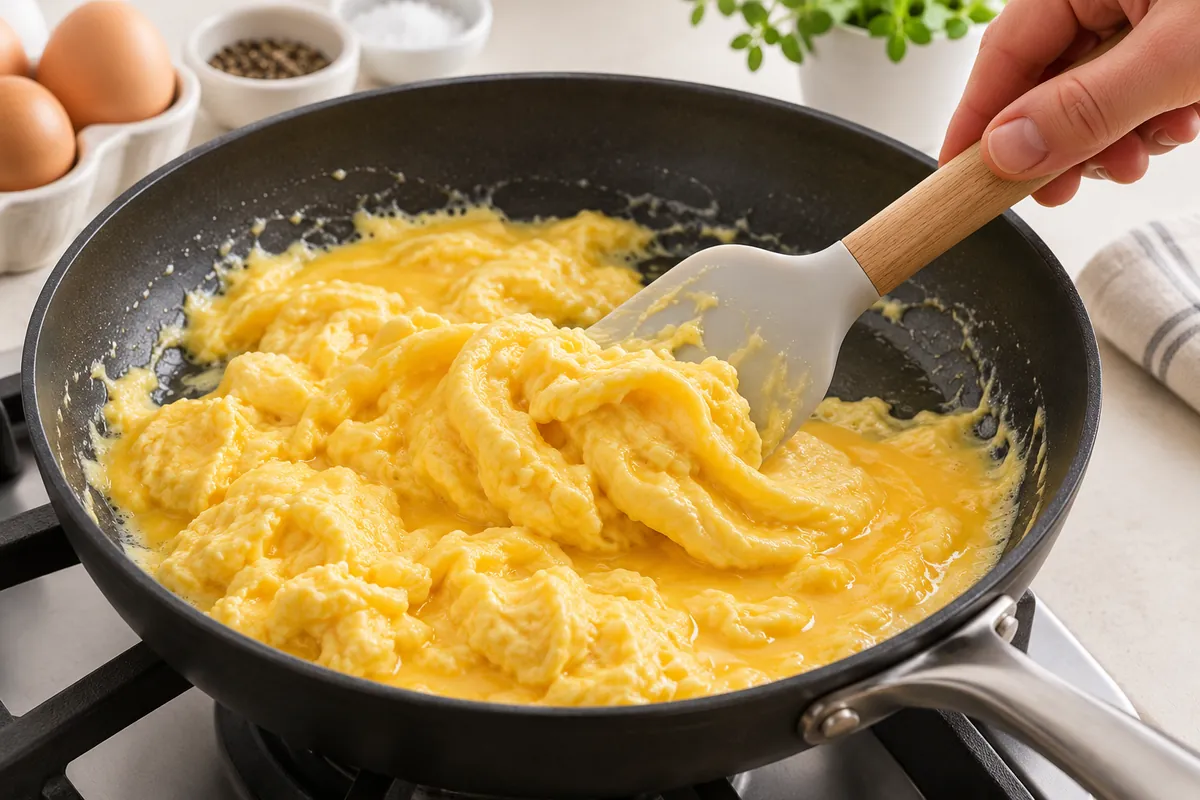
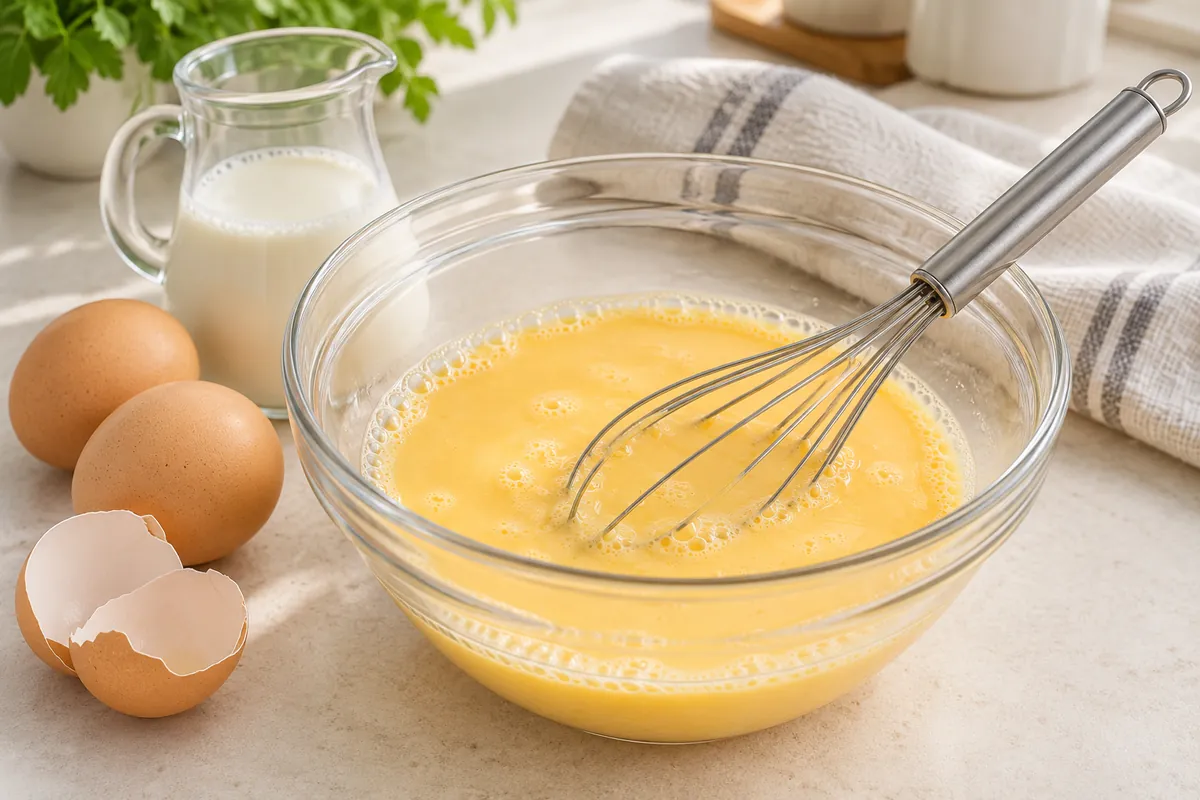
Eggs, milk, salt and pepper are whisked together in the bowl until the mixture is a uniform pale yellow color. Take your time with this part as the air that you incorporate into the eggs during the whisking process is what makes them so fluffy when cooked. A nonstick skillet on low heat is best. The butter should melt slowly and then start to foam but not brown. Do not use a hot pan as the butter will start to brown and the eggs will end up tough and dry. Eggs go into the pan and we wait for the edges to start to turn opaque. Then, using a silicone spatula, we gently draw the spatula across the bottom of the pan to form large folds of egg. I continue to fold the eggs gently, as if we were turning the pages of a book, until the mass of eggs thickens. As the mass of eggs thickens, I lower the heat further and continue to fold the eggs until they are loosely set but still shiny and slightly wet in the center. At this point I take the pan off the heat as the residual heat in the pan will finish off the eggs. I then scatter over the chives.
How to tell it is ready
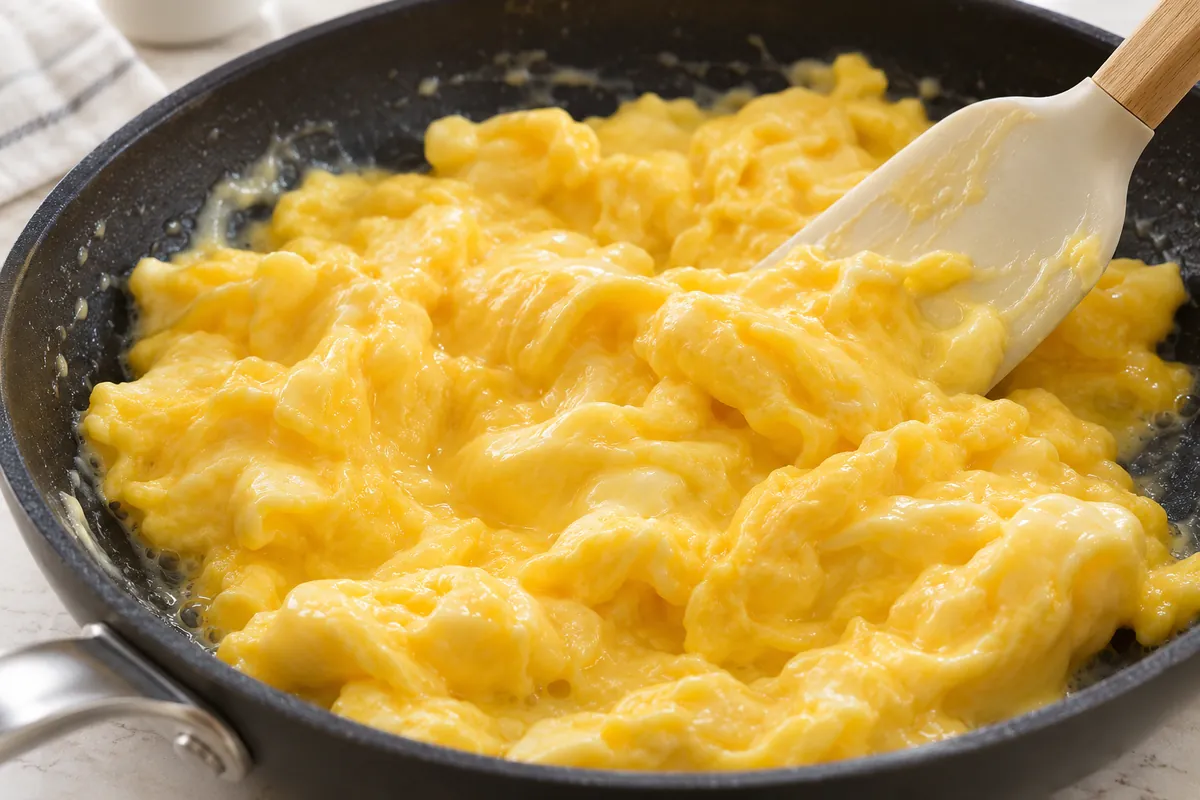
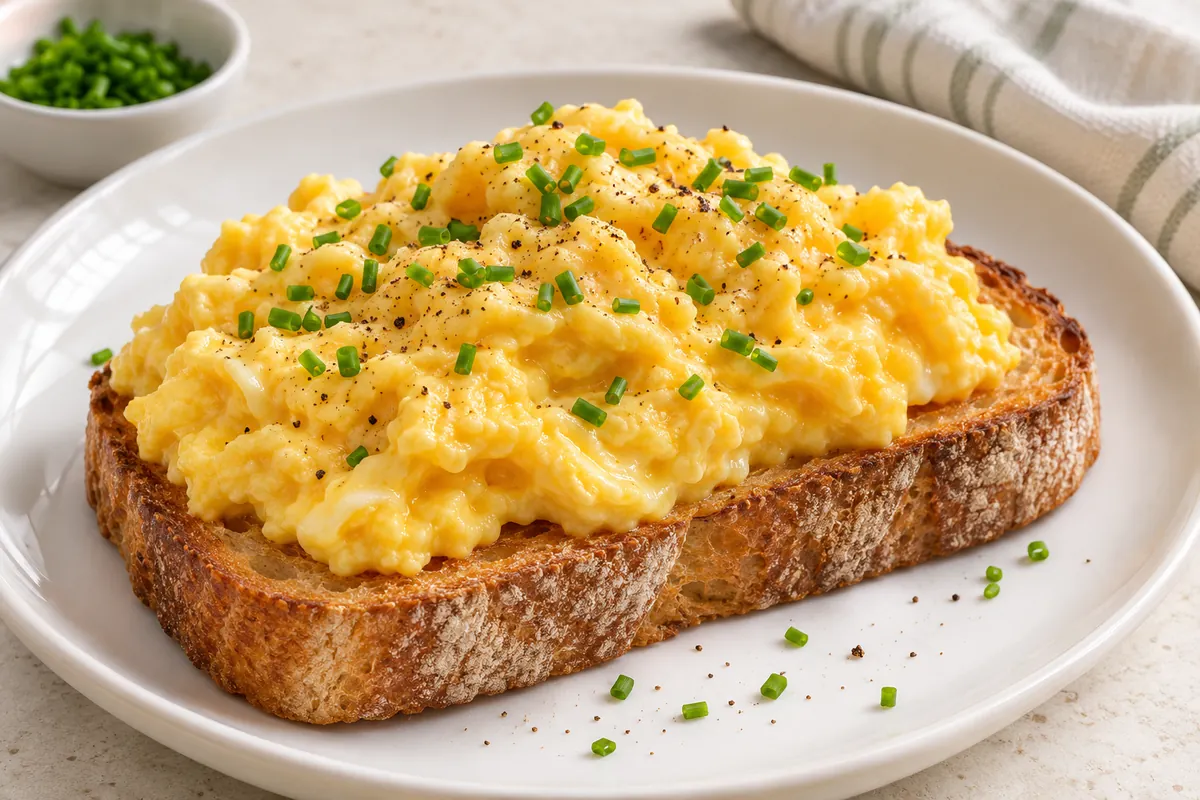
Perfectly cooked scrambled eggs should have large billowy curds of egg that are soft and shiny on the outside, like a set custard. They should hold their shape on a spatula but have a slight wobble to them. They should smell sweet, buttery and eggy. There should be no sharp sulfur-like smell. The eggs should be tender and creamy on the tongue, not rubbery or grainy. There should be no visible clear, runny liquid left in the pan, even though the eggs may look glossy. If you are cooking for young children, elderly people, pregnant women or anyone with a weakened immune system, then make sure that the eggs are fully set.
Tips for the best results
Use a pan of the correct size. Eggs that spread too thin will cook too quickly and become dry.
Use a flexible silicone spatula. This can reach all the curves of the pan and help to keep the curds of the eggs as large as possible.
Salt the eggs before cooking, not after. The salt will dissolve into the egg, season it evenly and help to keep the curds of the eggs as tender as possible.
Have your plates and toast ready to serve with the eggs. Scrambled eggs wait for no one.
Keep the heat lower than you think you should. This is the key to making great scrambled eggs.
Troubleshooting
Watery eggs on the plate. The eggs were probably cooked too fast or there was too much water in the pan from the addition of other ingredients. Lower the heat next time and ensure that any other ingredients added to the eggs are dry before adding. Rubbery, tight curds. The heat was too high or the eggs were on the heat for too long. Next time remove the pan from the heat earlier. Small, crumbly pieces. You were probably too vigorous in stirring the eggs. Fold the eggs gently and allow the curds to form as large as possible. Greyish-green tinge. This is caused by overcooking the eggs. Gentle heat is required to avoid this. Eggs sticking to the pan. The pan is probably too old or you haven’t used enough fat. A good nonstick pan is best.
Serving ideas
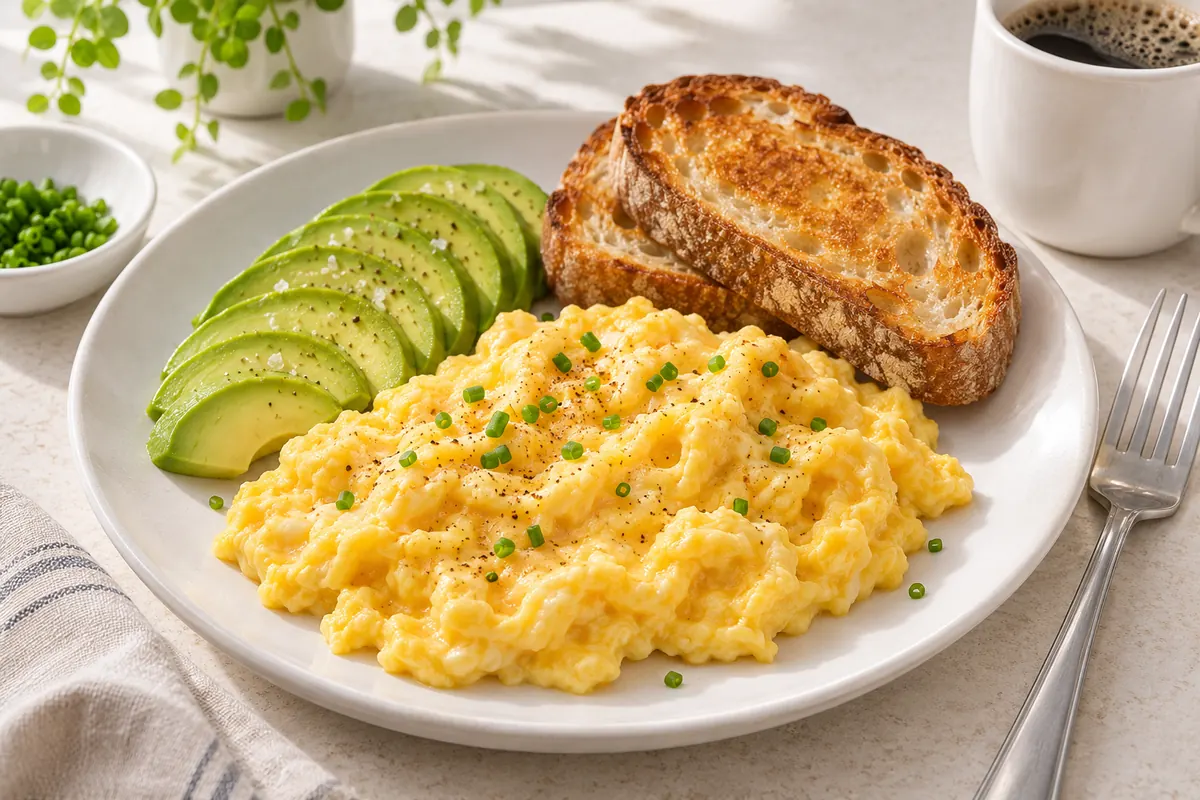
I serve the eggs on thick, lightly buttered slices of sourdough toast with a few slices of ripe tomato or avocado on the side. They would also be good on wholegrain toast, a warm tortilla or in a bowl with some wilted spinach and some roasted vegetables. A baked potato, split and topped with the eggs would be a more substantial meal as would some grilled mushrooms on the side. I also like a little hot sauce with the eggs if I’m in the mood for something with a bit of a kick.
Variations
Fresh herbs such as parsley, dill or tarragon would be great added to the eggs. A handful of grated sharp cheese, stirred in off the heat, would also be good. Goat’s cheese would be great too as it would add a tangy, creamy element to the eggs. During the winter of 2024 I started to add a spoonful of sautéed spinach and a little garlic to the eggs and this became a regular lunch of mine. Smoked salmon, folded into the eggs at the end, would also be great for a special weekend breakfast.
Storage and make-ahead
Leftover scrambled eggs can be eaten, but they are best eaten straight from the pan. If you do have leftovers, cool them within 2 hours of cooking and then refrigerate in a sealed container. They will keep for up to 2 days. Reheat the eggs gently in the microwave in short bursts or in a pan on low heat until they are steaming hot throughout. A teaspoon of milk stirred in can help to restore some of the softness to the eggs. I would not recommend freezing the eggs as they can become watery and spongy when thawed.
FAQs
Do I really need a nonstick pan?
The curds of the eggs will slide around the pan much better in a nonstick pan. A well-seasoned stainless steel or cast iron pan can also be used, with enough fat and low heat.
Is a whisk better than a fork?
A whisk will incorporate more air into the eggs and also blend the eggs and milk more evenly than a fork. A fork can be used but you will need to beat the eggs until no white streaks remain.
Should I add the salt before or after cooking?
Add the salt before cooking. The salt will dissolve into the egg, season it evenly and help to keep the curds of the eggs as tender as possible.
Can I add cheese?
Yes. Stir the cheese into the eggs once the pan has been taken off the heat so that the cheese can melt into the eggs, rather than becoming oily.
Why do my scrambled eggs turn green?
This is caused by overcooking the eggs, often in a hot pan that is left on the heat for too long. Remove the eggs from the pan as soon as they are cooked.
Are slightly runny scrambled eggs safe?
This depends on who you are cooking for. For most healthy adults, using fresh, properly stored eggs, there is little risk of becoming ill from slightly runny scrambled eggs. However, for vulnerable people, the eggs should be fully set.
Can I make these for a crowd?
Yes, but you will need to cook the eggs in batches in a large pan rather than making a big pile of eggs in the pan. Overcrowding the pan can cause the eggs to steam and this will ruin the texture of the eggs.
Before You Go
I still stand over the pan every time that I make these eggs as there is a fine line between creamy scrambled eggs and overcooked scrambled eggs. I hope that the more you make these creamy scrambled eggs, the better your sense of timing will become. Take your time, trust the gentle heat and serve the eggs while they are still glossy. If you make them well then I would love to hear from you. Please leave a rating and a comment below.


Healthy Soft, Fluffy & Creamy Scrambled Eggs
Description
These healthy scrambled eggs cook gently over medium-low heat with a little butter and a splash of milk, giving large, tender, custardy curds that stay moist on the plate. Ready in under fifteen minutes with simple pantry ingredients, they suit weekday breakfasts, light suppers and quick protein-rich meals.
For the scrambled eggs
Instructions
-
Making the scrambled eggs
- Crack the eggs into a medium bowl, add the milk, salt and pepper, and whisk for 30 seconds until the mixture is evenly pale yellow with no streaks of white.
- Place a 25 cm (10 in) nonstick skillet over medium-low heat for 1 minute, add the butter, and let it melt and foam gently without browning.
- Pour in the eggs and leave them undisturbed for 30 seconds, until the edges just begin to turn opaque.
- Using a silicone spatula, slowly push the eggs from the edges toward the centre for 2 minutes, forming large, soft curds.
- Reduce the heat to low and keep folding gently for 1 minute and 30 seconds, until the eggs are mostly set but still glossy.
- Remove the pan from the heat and let the eggs rest in it for 1 minute to finish cooking in the residual heat.
- Check that no clear, runny liquid remains, scatter over the chives, and serve straight away on warm plates.
Nutrition Facts
Servings 2
- Amount Per Serving
- Calories 280kcal
- % Daily Value *
- Total Fat 21g33%
- Saturated Fat 8.5g43%
- Cholesterol 560mg187%
- Sodium 500mg21%
- Potassium 230mg7%
- Total Carbohydrate 2g1%
- Sugars 1.5g
- Protein 19g38%
- Vitamin A 300 mcg
- Calcium 90 mg
- Iron 2.6 mg
- Vitamin D 3.5 mcg
* Percent Daily Values are based on a 2,000 calorie diet. Your daily value may be higher or lower depending on your calorie needs.
Note
- Cook the eggs until no clear, runny liquid remains; the safe internal temperature for eggs is 71°C (160°F). Cook until fully firm for young children, older adults, pregnant women and anyone with a weakened immune system.
- Keep the heat at medium-low (pan surface 120°C / 250°F) and lower it further once the curds form; high heat makes scrambled eggs tough and watery.
- Cool leftovers within 2 hours of cooking, store in a sealed container in the refrigerator for up to 2 days, and reheat until steaming hot throughout.
- For a dairy-free version, use unsweetened oat milk and mild olive oil in place of the milk and butter.