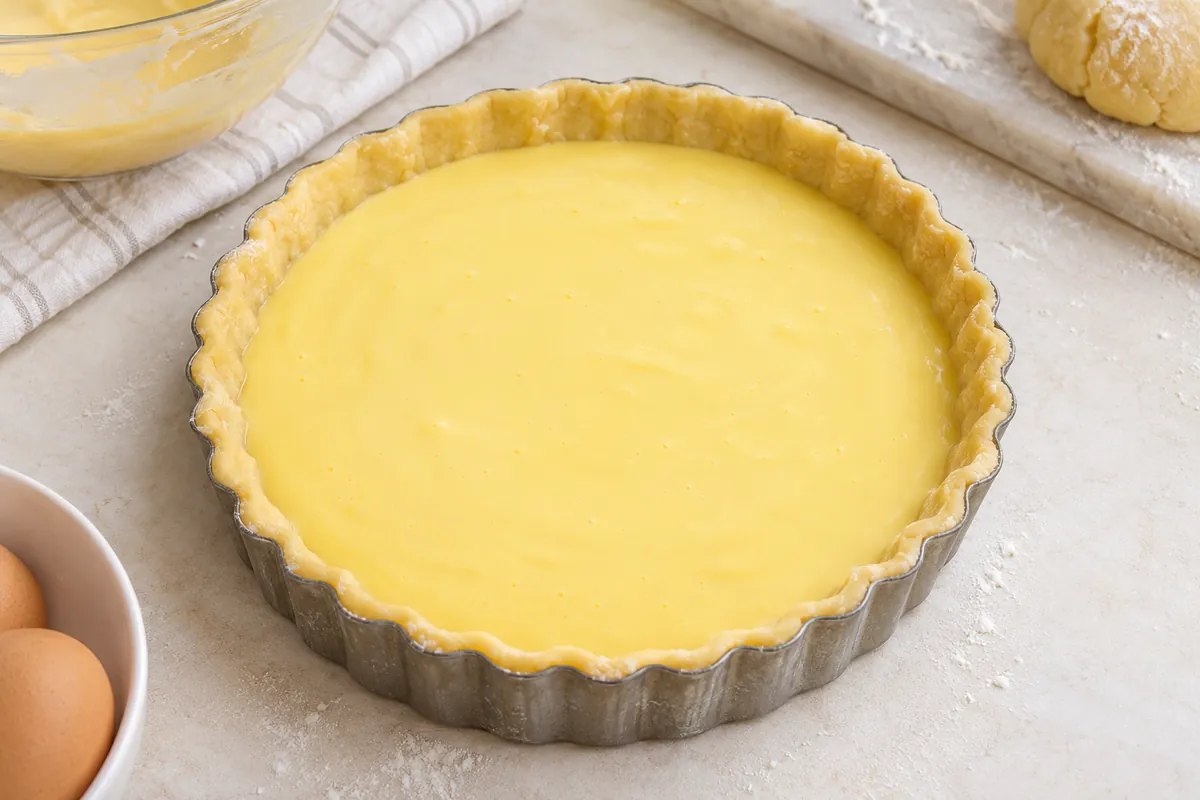
This is my go-to for a dessert that looks like it’s going to be a bit bland but is actually delicious. It’s a sweet shortcrust shell filled with a silky smooth custard that has a subtle hint of lemon, topped with a second layer of pastry and lots of pine nuts. The top of the tart turns a light golden colour, the smell in the kitchen is buttery, citrus and subtly nutty. It’s not difficult to make, but does require a bit of patience. Since early 2024 this is the dessert I serve when we have friends over for coffee, and I’ve not really changed anything in 2025. It’s a nice, simple old fashioned cake. I like it.
Why you should make this torta della nonna
It’s the kind of dessert that makes you appreciate simple things done right. You don’t need much, just some good butter, eggs, and a lemon. It’s also a generous dessert. One tart will feed a crowd. It’s clean to slice once it’s cold. It’s better the second day than the first. And there’s the contrast. The pastry is short and crisp. The custard is smooth and cool. The pine nuts are a subtle resinous crunch. You get all three with every bite.
Ingredients – a few thoughts
Pastry. Get real unsalted butter. Cold from the fridge. Don’t use cheap spreads. They have too much water and the crust will be tough and pale. Just use plain flour. A bit of icing sugar (or caster sugar if you prefer) to keep the dough nice and tender. The custard. You want whole milk. You could use semi skimmed but the custard will be a bit less silky. Use a lemon with unwaxed skin. The zest goes straight into the custard and you want it clean and aromatic. A vanilla pod is the best for flavour. A good vanilla extract is a decent alternative. Egg yolks. Makes the custard rich and golden. Use fresh. Save the whites for meringues or an omelette. Cornflour or plain flour to thicken the cream. I prefer cornflour for a glossier and lighter set. But either will do. Pine nuts are expensive. They can go rancid. Buy them from a shop with good turnover. Smell them before you use. They should smell sweet, not sharp or stale. You could use blanched flaked almonds instead, if you can’t get pine nuts.
How to make the tart
Pastry first. Rub the cold butter into the flour with your fingertips until you get coarse pale breadcrumbs. Then add the egg. Mix with a light hand to bring it together. The dough should feel soft, slightly sticky but not wet. Try to handle it as little as possible. Flatten into discs. Wrap them. Put them in the fridge to rest. Cold dough is nice to roll. It keeps its shape in the oven. While the dough rests, make the custard. Gently warm the milk with the lemon zest and vanilla. Just until it’s steaming. It’s a nice smell at this point. Sweet and bright. In a separate bowl whisk the egg yolks, sugar and cornflour until pale and thick. Like soft ribbons. Now slowly add the hot milk to this, whisking as you go. Then put it back into the pan. Now you have to pay attention. Stir it constantly over a gentle heat. Scraping the base and the corners. It’ll seem like nothing is happening for a bit, then quite suddenly it’ll start to thicken and blip. Cook it a bit more, but not too much. Take it off the heat. It should be glossy, heavy on the spoon. Put some cling film over the top. Pressing it directly onto the custard. No skin will form. Leave it to cool. Roll the larger disc of pastry. Place it into your tin. Press it into the corners but don’t stretch it. Spoon in the cooled custard. Spread it evenly. Roll the second disc. Place it over the top. Pinch the edges together to seal. Trim off any excess. Brush with beaten egg. Scatter the pine nuts over the top. Press them in gently so they don’t fall off. Make a few small cuts in the lid to let the steam escape.
How to know it’s ready
First look at the top. The pastry should be a nice even gold. The pine nuts should be a warm amber colour, toasted. If the edges are getting brown quicker than the middle, cover them loosely with some foil. Smell is a good thing to use here. When the tart is ready it should smell rich, buttery, nutty. A subtle sweetness of lemon underneath. If you’re getting a sharp burnt smell at the edges, the nuts are getting too far. Also look at the sides. The pastry should look dry and set. No pale raw bits. Gently lift an edge of the tin. The tart should feel firm. Don’t worry if the custard seems a bit wobbly underneath the lid. It’ll firm up completely as it cools.
Tips to get the best results
Cold everything when making the pastry. Warm butter makes the crust greasy and tough.
Don’t overwork the dough. Just stop when it comes together.
Make sure the custard is fully cool before filling. Otherwise the bottom will go soft. The lid will slump.
Press cling film onto the custard as it cools to stop a skin forming.
Bake on a lower shelf. Ideally on a preheated tray. So the bottom crisps up nicely.
Leave the tart to cool completely in the tin before slicing. It’s all about the patience.
Troubleshooting
Soggy bottom. Custard was warm when you put it in. Or the tart was baked too high in the oven. Cool the custard. Use the lower shelf. Lumpy custard. Not enough stirring. Or too much heat. Sieve it. Whisk again. Cracked pastry. Dough was too dry or too cold. Leave it a few minutes at room temp. Then gently roll. Custard leaking out. Didn’t seal the edges well. Press them together firmly. Brush with a bit of beaten egg. Pine nuts burning. Oven is too hot at the top. Move the tart lower. Or loosely cover the nuts with some foil towards the end.
Serving ideas
I like a slice at room temp. Dusted lightly with some icing sugar. With a strong black coffee. It’s a nice dessert to end a dinner with. Maybe a few fresh berries on the side. A dollop of softly whipped cream or a small scoop of vanilla ice cream works well with it. But you don’t really need anything. If you want a more festive looking plate you could add some slices of poached pear. Or a drizzle of warm apricot jam.
Variations
Add a bit of orange zest as well as the lemon. The custard will have a more subtle, warmer smell. A tablespoon of rum or amaretto stirred into the cooled custard will give it a nice depth. Grown up. In the autumn of 2024 I started scattering a few dark chocolate shavings on top of the custard before I put the lid on. And I’ve been doing it ever since. Fold some ricotta into the custard. It’ll give you a richer slightly grainy custard. More like some of the regional versions. If you want a gluten free version, a good gluten free flour blend will work for the pastry. But the dough will be more delicate. Needs more gentle handling.
Storage and make ahead
Torta della nonna is best stored in the fridge. Because the filling has milk and eggs. Cover loosely. Or put in an airtight container. Eat within 3 days. Take it out 20 mins before serving to take the chill off the pastry. Don’t leave it at room temp for more than 2 hours. Especially if it’s warm. Custard is the perfect place for bacteria to grow. Cool it quickly. Keep the finished tart cold. Be careful with egg based fillings if you’re pregnant, young kids, older adults, or have a weakened immune system. It’s fully cooked in this recipe, but you still need to chill it properly. You can make the pastry up to 2 days ahead. Keep it wrapped in the fridge. You can make the custard a day in advance too. I wouldn’t freeze the finished tart. The custard will be watery when it thaws.
FAQs
Why is it called torta della nonna?
Torta della nonna means grandmother’s cake in Italian. It’s a homely traditional kind of dessert.
Can I use shop bought pastry?
Yes you can. It’ll save time. A shortcrust with real butter will taste best.
Can I make it without the pine nuts?
Yes. Flaked almonds are a good alternative. Or you could just dust the top with icing sugar.
Does the custard need to be thick?
Yes, quite thick. Like a soft pudding. If it’s too thin it’ll run when you cut the tart.
Why is my custard lumpy?
Probably overheated it. Or not whisked it enough. Sieve it. Beat it again until smooth.
Can I use a different size tin?
Yes. But the baking time and thickness will be different. A 23cm tin will give a slightly shallower tart.
Can I make it a day ahead?
Yes. It’ll taste even better after resting overnight in the fridge.
A Note From My Kitchen
I’ll admit I’ve rolled the torta della nonna too thin more than once. And then watched the custard find its way out through a crack. Don’t let that put you off. A bit of patience with the pastry pays off. Take your time. Keep things cold. Leave the tart to cool before you cut. If it goes well for you then please leave a rating and comment below.


Torta della Nonna – Classic Italian custard tart with pine nuts
Description
This torta della nonna is a classic Italian tart with a buttery shortcrust shell, a smooth lemon and vanilla custard, and a golden lid scattered with pine nuts. It takes time to chill and cool, but the steps are simple, and it serves 10 as an elegant dessert.
For the pastry, custard and topping
Instructions
-
Making the torta della nonna
- Rub the flour, icing sugar, salt and butter together for 5 minutes, until the mixture looks like fine breadcrumbs; mix in the whole egg and 1 egg yolk to form a soft dough.
- Divide the dough into 2 portions, with one slightly larger than the other, flatten into discs, wrap and chill for 1 hour.
- Heat the milk with the lemon zest and vanilla in a saucepan over medium heat for 5 minutes, until steaming, then remove the zest.
- Whisk the 4 egg yolks, caster sugar and cornflour for 2 minutes until pale, pour in the hot milk slowly while whisking, then return to the pan.
- Cook over medium-low heat for 4 minutes, stirring constantly, until thick and glossy; cover the surface with cling film and cool for 1 hour.
- Preheat the oven to 180°C (356°F). Roll out the larger disc to 3 mm thickness and line a 23 cm (9 in) loose-bottomed tart tin, trimming the edges.
- Spread the cooled custard in the tin, roll out the second disc, lay it on top, seal the edges, brush with beaten egg and scatter over the pine nuts.
- Bake on the lower shelf for 40 minutes, until deep golden; cool in the tin for 1 hour, dust with icing sugar, and serve.
Nutrition Facts
Servings 10
- Amount Per Serving
- Calories 380kcal
- % Daily Value *
- Total Fat 20g31%
- Saturated Fat 10g50%
- Cholesterol 175mg59%
- Sodium 70mg3%
- Potassium 120mg4%
- Total Carbohydrate 44g15%
- Dietary Fiber 1g4%
- Sugars 20g
- Protein 7g15%
- Vitamin A 150 mcg
- Calcium 85 mg
- Iron 1.8 mg
- Vitamin D 1 mcg
* Percent Daily Values are based on a 2,000 calorie diet. Your daily value may be higher or lower depending on your calorie needs.
Note
- Cool the custard completely before filling the tart, so the pastry base stays crisp and the lid does not slump.
- Cover the edges loosely with foil if they brown too quickly; the tart is ready when the top is deep golden and the pastry looks dry and set.
- Cool the tart in the tin for 1 hour, then refrigerate, covered, for up to 3 days. Do not leave it at room temperature for more than 2 hours.
- The pastry can be made up to 2 days ahead and kept wrapped in the refrigerator; the custard can be made 1 day ahead.